


How can wind energy be made even more sustainable?
- Digitalization
- Service
- Drive Technology
- Windenergy
- 21.5.2026
- Reading Time: {{readingTime}} min
Contents
When can we expect increased downtimes of wind turbines?
Wind turbines are usually designed for a service life of about 20 to 25 years and the investment costs often pay for themselves very quickly: After only about 2.5 to 11 months of operation, more energy is generated than was needed for production, transport and installation. The longer a wind turbine can be operated, the more positive its overall ecological balance will be.
However, as the service life increases, wear and tear on individual components can affect performance. A regular maintenance program helps to counteract this and avoid unplanned downtimes.
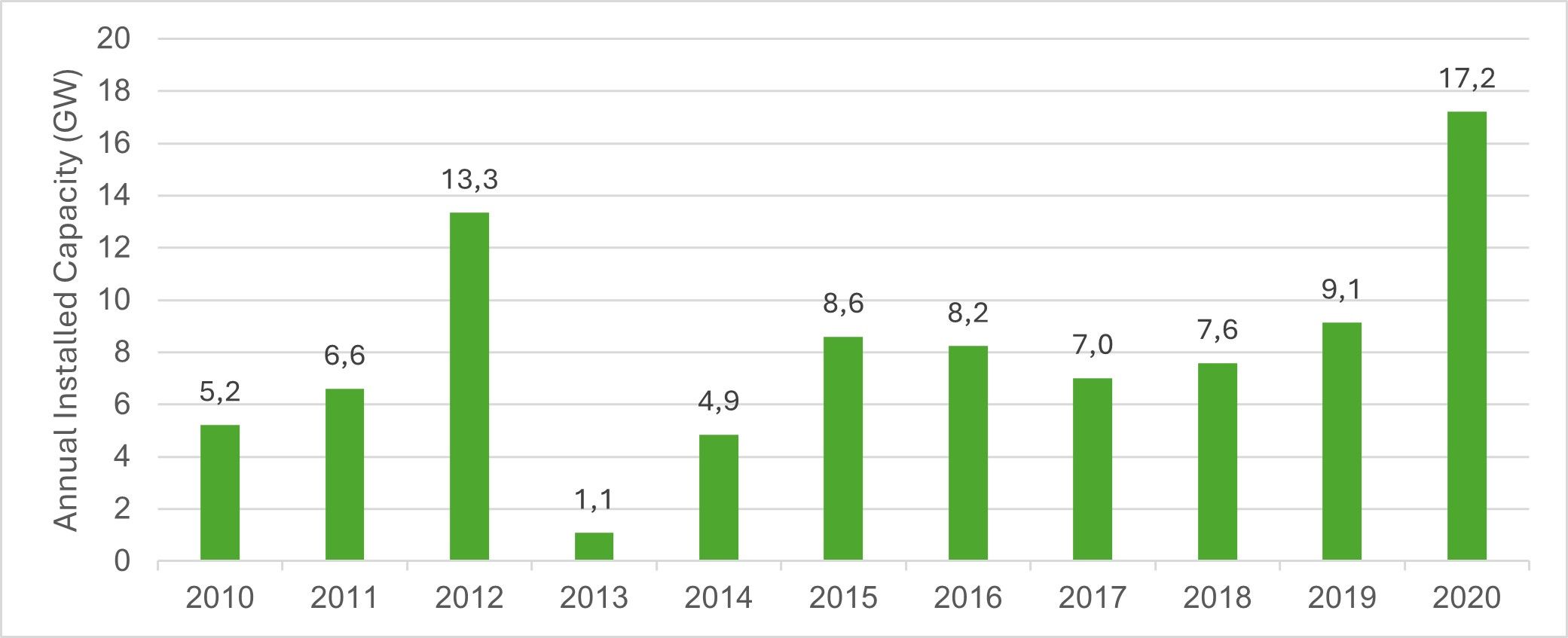
If you look at the expansion phases of wind energy and the commissioning of wind turbines, for example in the USA, it becomes clear that there were strong and weaker phases. Between 2010 and 2012, for example, a first boom can be seen and another strong wave of expansion can be seen for the years 2015-2020. From this it can be deduced that the aging of the wind turbine stock varies regionally and over time. At the same time, in the next ten years, a large proportion of today's middle-aged turbines will shift into the age group of 15 to 25 years.
This significantly increases the need for targeted maintenance and repair strategies in order to ensure the performance of the plants in the long term and to make the most of their service life.
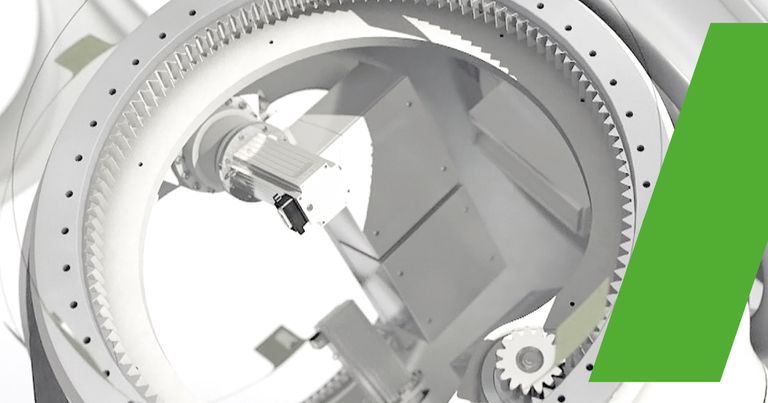
U.S. Wind fleet reach window for modernization to extend lifetime

As the turbines age, new challenges arise:
- Wear and tear of mechanical components such as bearings or gearboxes
- Outdated control and drive technology
- Lack of spare parts availability
- Increased requirements for grid stability and efficiency
At the same time, the economic pressure to operate plants as efficiently as possible and avoid downtimes is increasing.
For operators, the question often arises: Should a system continue to be operated, modernized or completely replaced?
Retrofit or repowering – two ways to modernize
In order to make existing plants fit for the future, there are basically two strategies available: repowering or retrofit.
Repowering: Replacement with more powerful (and often larger) turbines
In repowering, an existing wind turbine is completely replaced by a modern plant. The new turbine uses the same site, but offers significantly higher performance and more efficient technology.
Advantages of repowering:
- Significantly higher energy yields
- More modern, quieter plant technology
- Increased efficiency per location
As a rule of thumb for the efficiency of repowering measures, a doubling of the output and even a tripling of the electricity yield can be achieved by halving the number of turbines.
Cons of repowering:
- Very high investment costs
- Long implementation time
- Frequently new permits required
- Disposal of components that are difficult to recycle (rotor blades)
The pitch system can be responsible for up to 20% of the downtime of wind turbines.
"Targeted retrofit measures can help recoup lost revenue resulting from production downtime across the entire fleet."

Retrofit: targeted modernization of existing systems
In many cases, structural components of wind turbines such as foundations, towers and nacelles are still in good technical condition even after more than ten years of operation. At the same time, age-related effects at the component level are increasingly evident in this phase. These include increasing failure rates of individual assemblies, increasing unplanned downtimes and performance losses due to degraded or outdated systems.
Causes include:
- Component obsolescence and limited spare parts availability
- Drift and wear of sensors and actuators
- Outdated control and regulation algorithms
- Increased susceptibility to unnecessary nuisance trips due to insufficient signal processing
A retrofit specifically addresses these points. The existing plant is retained while critical subsystems are modernized or replaced. Typical measures include:
- Control and automation technology Replacement of turbine controls and SCADA systems, integration of modern control algorithms and improved data processing
- Power electronics and drive systems Renewal of converters, generator connection and protection technology to improve grid compatibility and operational safety
- Pitch systems Modernization of drives, backup systems and pitch control to increase availability and reduce incorrect shutdowns
- Sensors and condition monitoring Use of more precise measuring systems and condition monitoring for early fault detection
- Energy storage / backup systems Replacement or upgrade of battery systems to ensure safe blade adjustment in the event of a power failure
The technical added value results from a more stable and precise system management. Modern control systems reduce incorrect shutdowns through improved plausibility checks of measured values. At the same time, the robustness against grid events and transient operating states increases.
Economically, the retrofit approach enables the targeted extension of the operating life without having to intervene in structural plant components. The existing infrastructure will continue to be used, while critical vulnerabilities will be systematically eliminated. This allows availability and energy yield to be stabilized and operating risks to be reduced, with significantly lower investment costs compared to a complete new construction or repowering.
The economic advantage of a retrofit lies primarily in the fact that existing infrastructure can continue to be used. The foundation, tower, gondola and often large parts of the mechanical system are retained.
As a result, the investment costs are typically 50 to 80% lower than the costs of a complete repowering – depending on the scope of the modernization.
Typical orders of magnitude:
| Action | Typical investment framework (CAPEX) |
|---|---|
| Retrofit of the Pitch-System* | approx. 20,000-50,000 € |
| Extensive retrofit | approx. 500,000 € per MW |
| Full repowering | approx. 1 – 2 million € per MW |
* Includes axis boxes (pitch drive and energy storage), center box, and pitch motors.
The investment costs for retrofit projects are thus significantly lower than for repowering or even new construction, while at the same time increasing efficiency, availability and durability.
Practical example: Retrofit of a 1.5 MW wind turbine
A current KEBA retrofit project shows how existing systems can be technologically modernized.
In the case of a 1.5 MW GE turbine, the outdated pitch system was replaced without the need for structural modifications. The aim was to improve performance and to be able to continue operating the plant in the long term.
Core components replaced included:
Project progress: From preparation to commissioning
Preparations for the project began as early as 2024 with the technical coordination of the partners involved. An important step was the training of the participating teams at the KEBA site in Unna, including for the software tools PitchManager and DriveManager.
The new engine was delivered at the end of 2024 and extensively tested on KEBA's own engine test bench.
Another major milestone achieved in 2025 was the integration of our converter into the turbine control system.
The modernised plant was commissioned at the beginning of Q1 2026. During commissioning, the converters of the pitch systems were parameterized and tested step by step.
The following measures were used, among others:
- Optimization of the speed controller
- Conversion to attitude control
- Step-by-step increase in leaf movements
- Definition and testing of a Safe-Feathering-Run profile
Thanks to this structured approach, the modernized pitch system could be safely put into operation. Current operational data confirmed the performance of the modern system under a wide range of wind conditions, thereby demonstrating that the targets for efficiency, response time and reliability had been achieved.

Summary: Retrofit as a strategic option for existing wind farms
Many wind turbines around the world show increased fault and downtime with increasing age and thus a decreasing performance or are even approaching the end of their original design period. At the same time, basic structures such as the tower, foundation and rotor are still in good condition and can be used for many years.
Retrofits are particularly appealing for turbines in their middle age, as they allow for an extension of the overall service life, a recovery of the plant’s declining productivity, and the preservation of key components. For operators, this can be an attractive alternative to a complete repowering.
For systems engineers, it means one thing above all: The combination of modern automation technology, high-performance drives and open system architecture opens up new possibilities for continuing to operate existing wind turbines efficiently, reliably and future-proof.