


How KeBob Learns to See and Understand
- 31.7.2026
- Reading Time: {{readingTime}} min
Contents
What Is Computer Vision?
Computer Vision is a field of artificial intelligence that enables systems to analyze and understand visual information from images and video streams. In simple terms, the camera captures the scene, while the AI evaluates what is happening. However, detecting objects is only the first step. The real challenge lies in interpreting situations correctly. Is a person actually lying on the floor, or simply sitting in an unusual position? Is an incident critical or part of normal everyday activity? To make these distinctions reliably, AI requires large amounts of high-quality training data and a carefully designed development process.
The performance of any AI system depends directly on the quality of the data used to train it. That is why KEBA does not rely solely on generic, off-the-shelf AI models. Instead, we follow a controlled development process designed specifically for safety-relevant applications. Training data is first prepared using automated labeling pipelines and then reviewed and refined through a professional annotation process.
Importantly, this data annotation is carried out in Austria. Experienced specialists verify the data, review edge cases, and ensure that training sets meet strict quality standards. The result is an AI system that has learned from carefully curated data and can reliably recognize relevant situations in real-world environments.
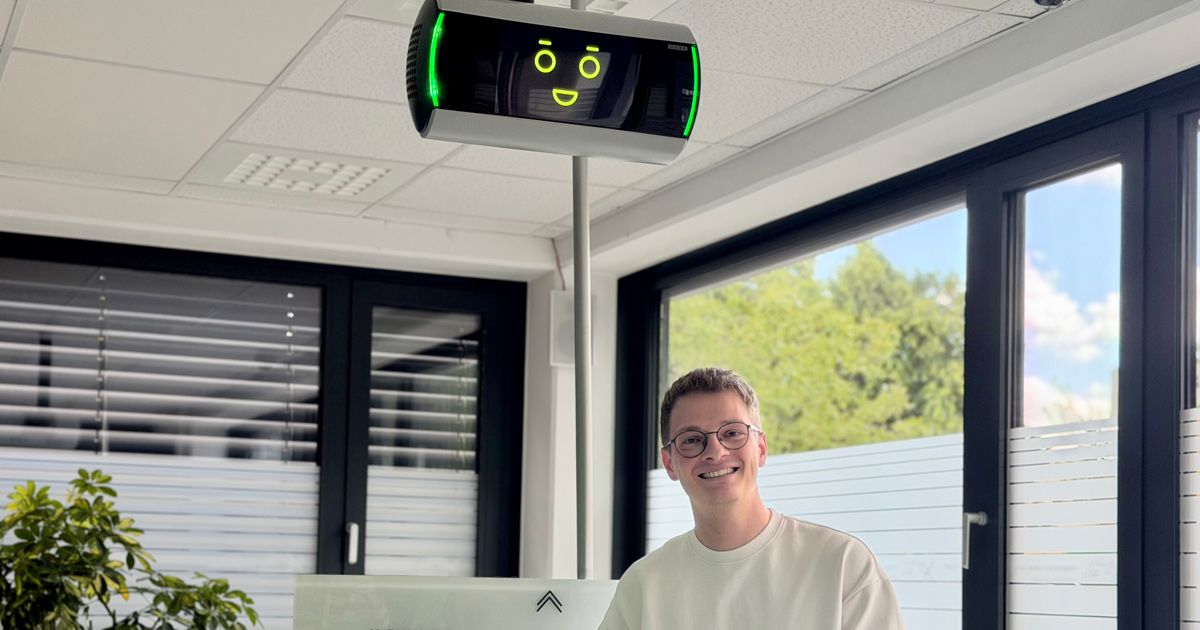
"What humans see naturally, AI first has to learn from data. My role is to teach these systems how to interpret visual information reliably."

Why KeBob Invests More Effort
Developing reliable AI requires far more than training a model once and deploying it. At KEBA, every computer vision model is continuously tested, evaluated, and optimized.
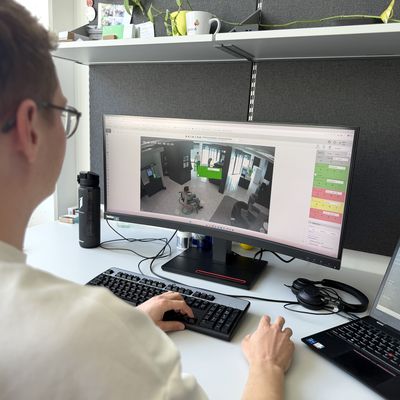
Performance is measured through detailed metrics, visualizations, simulations, and real-world test scenarios. Our experts constantly analyze what the AI actually sees, how it interprets events, and whether it performs consistently under varying conditions.
One example is KeBob's lying detection capability. To validate the system, colleagues recreate realistic emergency scenarios in which a person is lying on the floor. These tests help ensure that the AI can recognize such situations reliably and respond in real time.
This additional effort is one of the reasons why high-quality AI solutions cannot be compared to standard software products. In sensitive environments such as bank branches, self-service areas, or other semi-public spaces, reliability is not optional. It is essential.
Developed and Trained in Austria
Trust starts with transparency.
KEBA follows a development approach that emphasizes quality, accountability, and control throughout the entire AI lifecycle. Data annotation is performed together with an Austrian partner, while the AI models themselves are developed, tested, and continuously improved by KEBA's Computer Vision experts.
Keeping this expertise and quality assurance process close to home allows us to maintain high standards and ensure full transparency regarding how our AI is trained and validated.
For customers, this means they are not investing in a black-box solution. They are choosing a system built on carefully managed data, rigorous testing, and a development process designed to deliver dependable results.
AI You Can Rely On
What humans recognize naturally, AI first has to learn.
This is the challenge at the heart of modern Computer Vision. By combining high-quality training data, Austrian data annotation, continuous quality assurance, and extensive real-world testing, KeBob delivers AI that can reliably recognize critical situations and support people when it matters most. Because when it comes to safety-relevant applications, using AI is only part of the story. What truly matters is how well that AI has been trained.
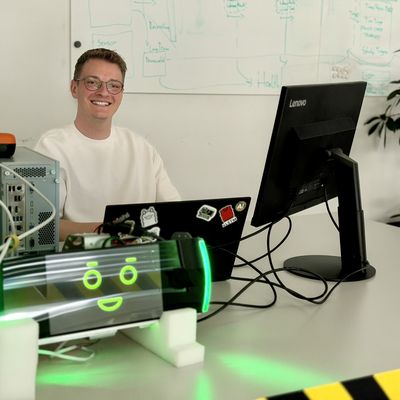
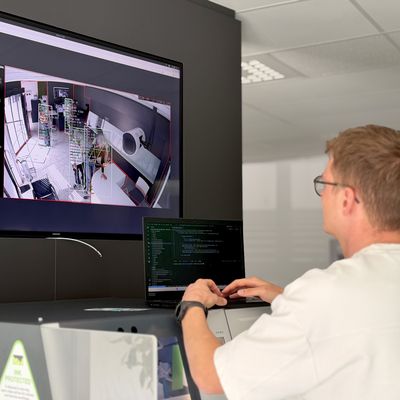
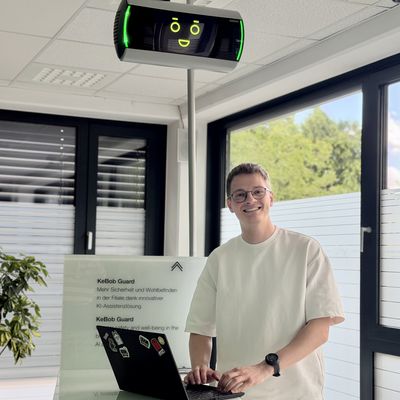
Want to see how AI is trained in practice? In our LinkedIn video, Markus shares insights into his daily work as a Data Scientist and explains how KeBob's Computer Vision models are developed, trained, and continuously improved. Watch the video to get a behind-the-scenes look at the people and processes that power KeBob.


Thank you for your request. Our KEBA Customer Support will get in touch with you soon.