




Comparing conventional vision & control with Kemro X: A packaging use case
- Digitalization
- AI
- 21.9.2026
- Reading Time: {{readingTime}} min

Contents
AE 550: The foundation for integrated AI vision
The AE 550 is a high-performance, compact hardware inference accelerator module that can be connected directly to a KEBA controller from the C5 series as an extension module.
It is designed to meet the demanding needs of modern industrial applications. It features an open architecture that allows a highly flexible integration and customization. With real-time capability, it ensures immediate processing and response, which is crucial for time-sensitive operations.
Data sovereignty and security are prioritized, ensuring that all data is handled with the highest standards of protection.
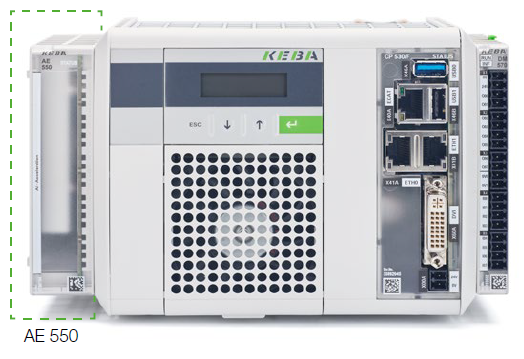
KeControl CP520/C extended by the AI Extension Module AE 550 (plugged in on the left-hand side)
What sets the AE 550 apart from other industrial AI solutions?
The big difference to other industrial AI accelerators in industrial PCs or controllers is the seamless integration into the KEBA control system.
This allows AI tasks to be performed directly from the PLC code. Built for industrial long-term availability, this accelerator is both durable and reliable, making it a sustainable choice for long-term projects.
It is also optimized for energy and cost efficiency, reducing operational expenses while maintaining high performance.
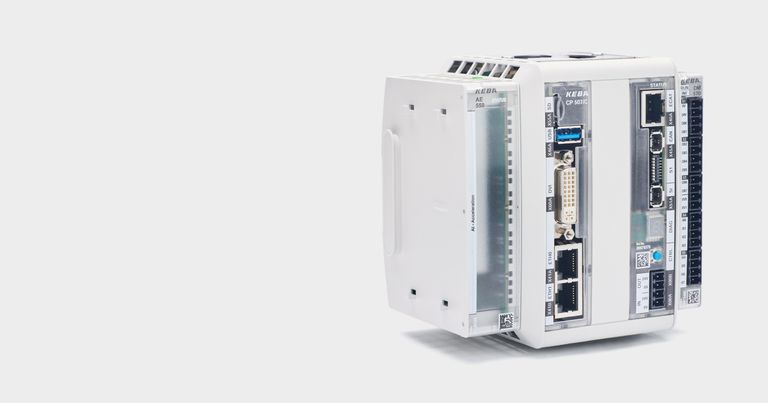

A robotic packaging use case: The conventional approach
The advantages of the deep integration of the AI and vision system can be described very well using the example of a modern robot packaging solution. In such an application, up to three different controllers and industrial PCs are installed with current solutions available on the market:
- First of all, a robot controller is needed to control the picking robots.
- Then it needs a camera system or an industrial PC that takes over the vision tasks, possibly carrying out a visual quality inspection and providing the robot with the coordinates of the objects to be picked.
- Finally, a PLC is required as well to connect all the other sensors in order to form the user and control the application process interface.
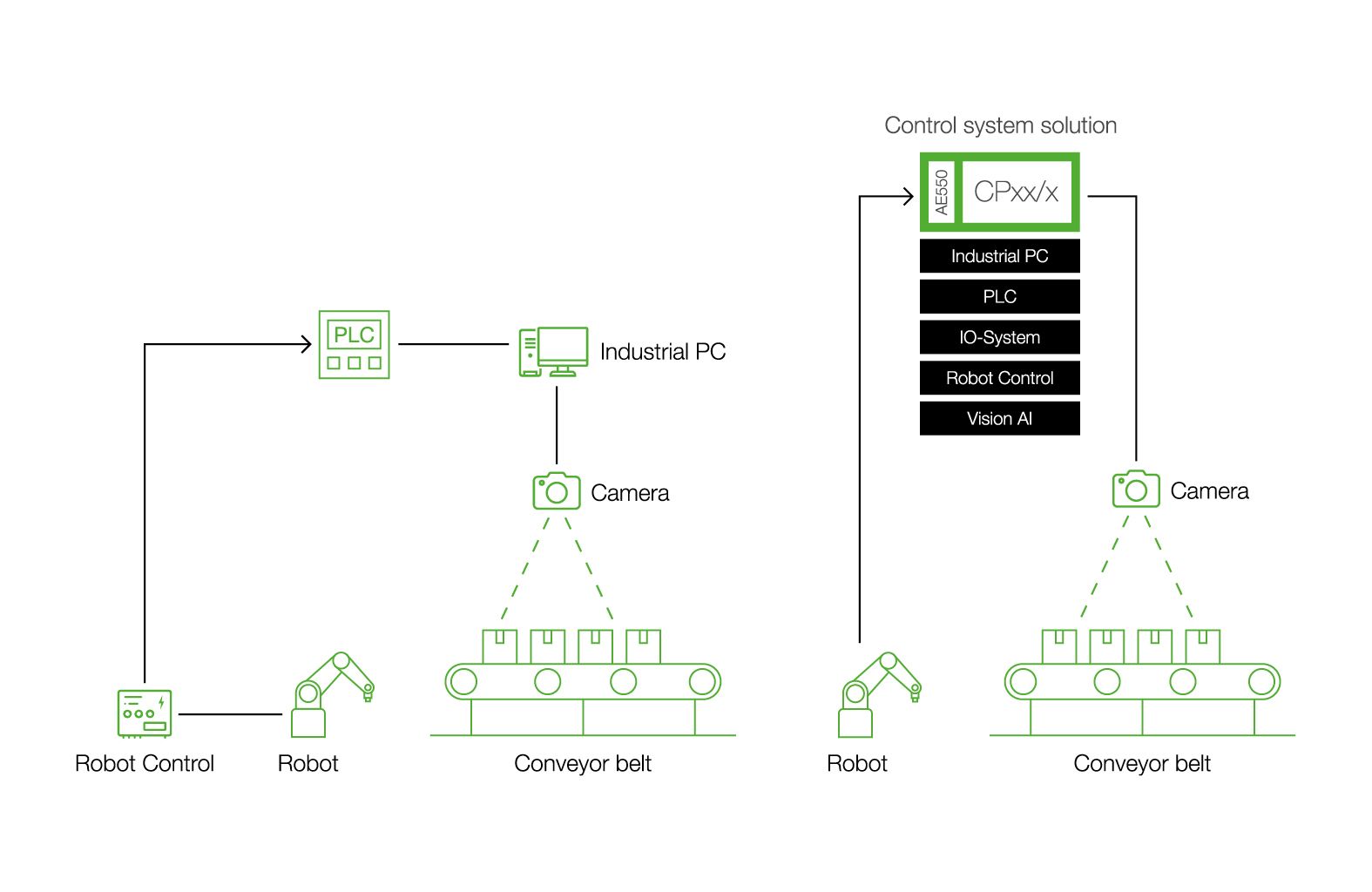
Comparison of a conventional vision & control solution with the Kemro X solution
Common challenges of the conventional approach – and how Kemro X addresses them
Common challenges with the mentioned conventional approach:
All these systems must be parameterized and/or programmed. This often requires completely different tools from different manufacturers, because most of the time the vision system provider does not provide a robot control nor PLC or vice versa.
There are hardly any specialists who can successfully handle all the systems. This means that different people are often needed to commission or maintain a machine application.
With the KEBA Kemro X industrial automation platform, only a single control system that bundles the PLC, robotics and all AI functionalities is used.
Likewise, only a single tool is needed to program all these system parts. This makes it easier for users to operate and for application engineers to program the system. Moreover: it also reduces the time needed to train new employees.

Have questions? Connect with the author.