




Success Story: Kyocera AVX Standort Klingenberg
- 18.3.2026
- Reading Time: {{readingTime}} min
Contents
When procuring workwear, decision-makers must consider many factors: safety, a consistent corporate appearance, comfort, efficiency - and costs. How all of this can be achieved is demonstrated by Kyocera AVX at its Klingenberg site.
The jointly developed solution benefits Kyocera AVX’s competence center for temperature, pressure, and fluid quality sensors located in Klingenberg near Dresden. The company develops and produces sensors and control units for the global automotive industry. “For over 25 years, we have been implementing demanding development projects for automotive manufacturers and system partners—the subsequent series production is largely carried out directly at our plant,” explains Kevin Stein, Head of Procurement.
Of the approximately 500 employees at the site, some require standard workwear, while around 300 employees in production must meet specific requirements for electrostatic discharge (ESD) protection. In addition to personal basic equipment, the company must also maintain replacement clothing for each employee and ensure hygienic and technically compliant processing to preserve protective properties. This resulted in a high logistical effort, which was initially consolidated and restructured in collaboration with a regional textile service provider.
Since early 2024, Steyer Textilservice GmbH, based in nearby Halsbrücke and part of the nationwide DBL – Deutsche Berufskleider-Leasing network, has been supplying Kyocera employees with the required protective clothing through a rental service.
“ESD workwear is product protection clothing that optimally dissipates electrostatic charge through conductive fibers in the fabric, thereby protecting the product,” explains Frank Schwabe from DBL Steyer. “We provide standardized antistatic clothing for around 300 employees in accordance with EN 61340-5-1. This includes polo shirts, T-shirts, and coats. For an additional 90 wearers, such as technicians in machine operations, we provide workwear from our BPlus Green collection, including sweatshirts and warming fleece jackets.”
Efficient Provisioning
This all-in-one approach - covering standardized protective clothing, modern workwear, and their maintenance - is well received by companies like Kyocera AVX, according to the textile service provider. However, there was still a need for a solution to centrally manage clothing inventory.
Previously, garments were rented on a per-person basis and stored decentrally in assigned lockers. Changes in staffing led to an increase in circulating garments, and the number of required lockers exceeded available capacity. Additionally, some employees did not return clothing when leaving the company.
The goal of the new solution was to create greater transparency and efficiency in clothing usage - specifically by switching to pooled garments instead of individually assigned workwear, managed through a traceable system. All of this had to be achieved without compromising quality, safety, or employee comfort.
“In addition to providing and maintaining garments, we also handle collection and delivery services, including distribution directly into company lockers if required. We often provide our own classic locker and hanging systems,” says Schwabe. “However, in this case, the customer required automated dispensing of pooled garments - so a different solution was needed.” To ensure flexibility and a solution-oriented approach, DBL quickly decided to involve another partner.
Wir sind sehr zufrieden mit dem Ergebnis, der Effizienz und der Flexibilität, mit der unsere Anforderungen von DBL und KEBA umgesetzt wurden.“
Automated Output
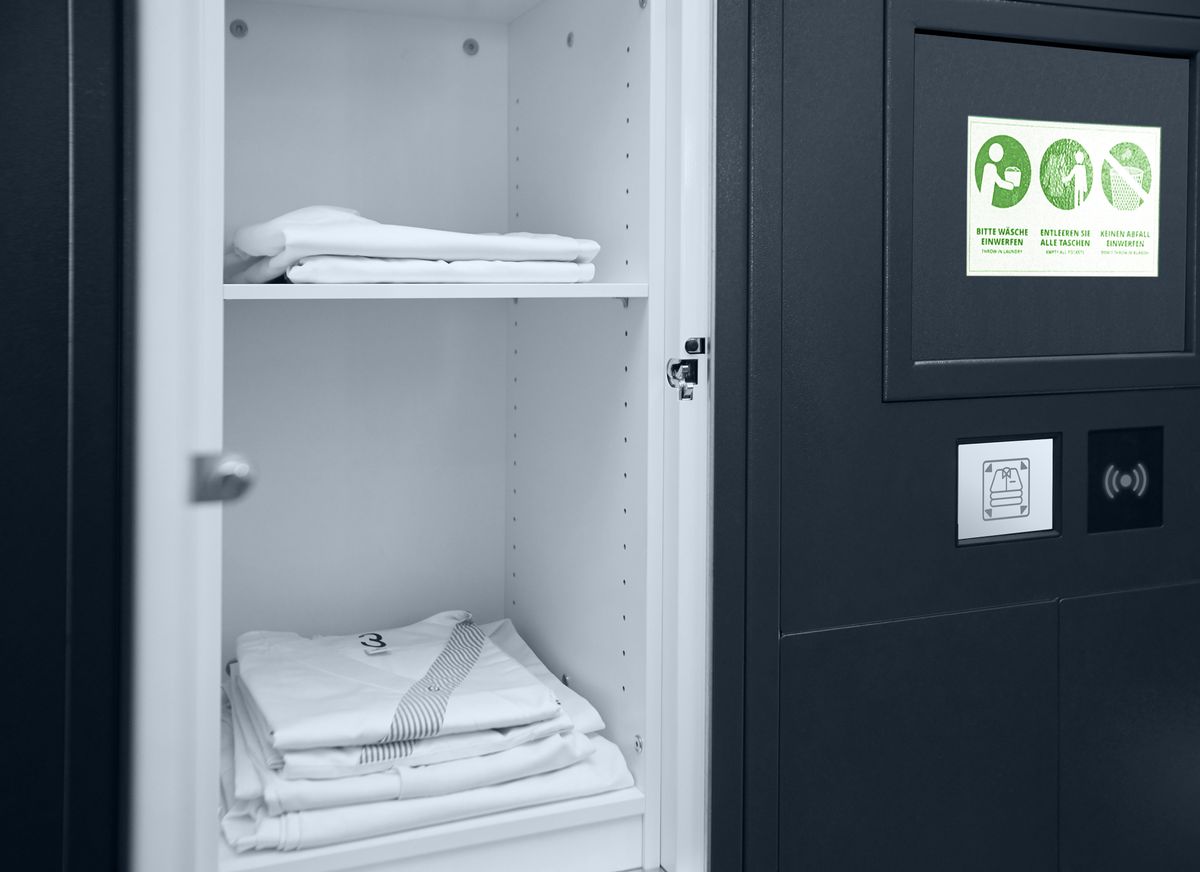
KEBA was the third company to enter the picture. The specialized laundry dispensing cabinets and return systems were also of interest to Kyocera AVX. But here, too, there was a challenge to overcome from the outset: For the laundry dispensing machine, the basic requirement is clothing equipped with UHF RFID transponder. However, the anti-static clothing being used was a novelty for KEBA. “ESD clothing and our RFID technology, which uses electromagnetic waves to read the chips, sounds counterproductive at first,” explains Ness. But a solution was found quickly.
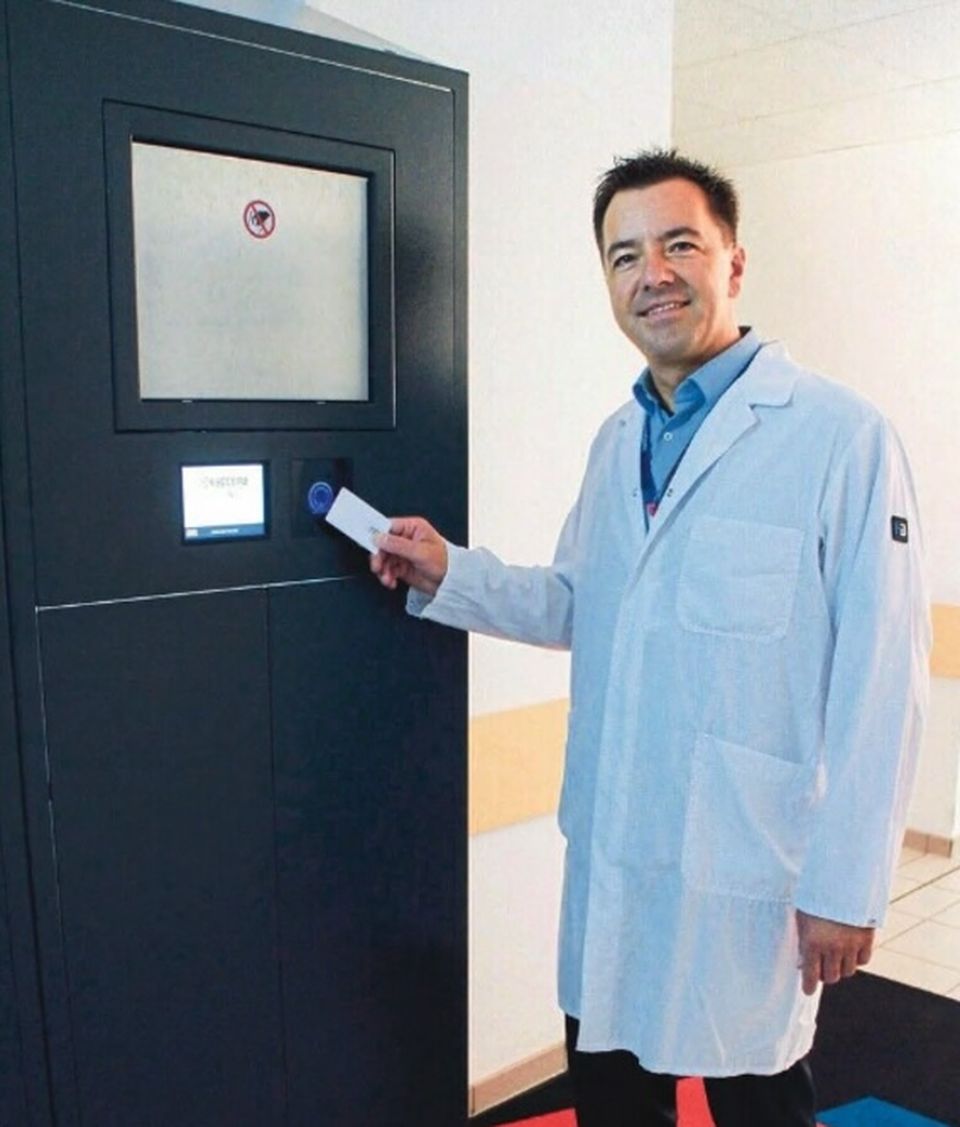
Here’s how it works in practice: With quota-based pooled clothing provided by DBL, Kyocera employees can remove a predefined quantity of clothing from the laundry dispensers. Once the garments are removed, the locker’s contents are updated, and with them, the employee’s quota. A fully traceable laundry cycle also includes a return system. The temporary assignment between the wearer and the garments is revoked upon return, and the employee’s quota is reduced accordingly. The textile service provider collects the UHF-RFID-tagged and counted pooled clothing and maintains it properly to ensure a long service life.
“Our requirement to rent clothing from the pool while still assigning it to specific individuals for use required a great deal of detailed clarification,” says Kevin Stein of Kyocera AVX. “The proper processing of specialized clothing is also a quality-related issue for us. Overall, this project—which is very important for our company—required many months of intensive collaboration with our partners and internal departments. Today, we are very satisfied with the result, the efficiency, and the flexibility with which our requirements were implemented by DBL and KEBA.”