



How an AI Assistant from the banking sector could transform post office branches in the future
- Product Updates
- Knowledge
- News
- 10.2.2026
- Reading Time: {{readingTime}} min
Contents
From the bank foyer to the post office: KeBob opens up new application possibilities
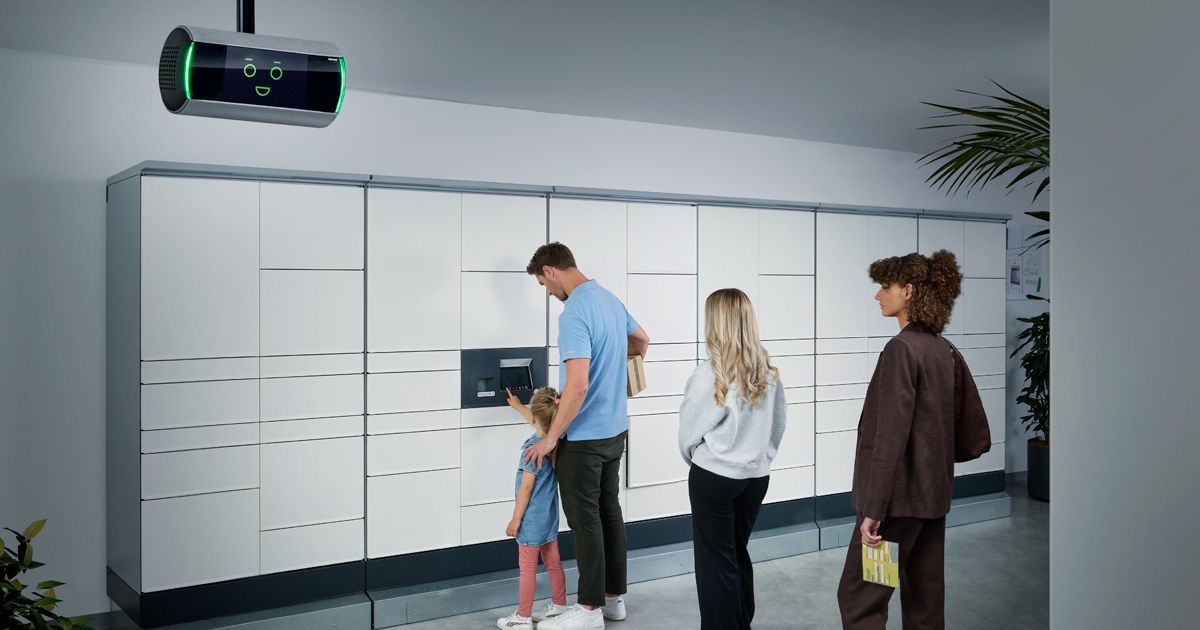
KeBob, the AI assistance system from KEBA , was developed to provide bank customers with a sense of security and to relieve branch teams. The AI observes situations within a space, detects unusual incidents, and responds automatically. This includes, among other things, recognizing breaches of distance, suspicious behavior, unauthorized access, or medical emergencies. KeBob is capable of addressing individuals, issuing warnings, and activating security systems.
This ability to interpret human behavior and respond immediately turns KeBob into an active digital employee that has already proven itself in banks—such as at Sparkasse Südwestpfalz or VR Partnerbank . These very characteristics could also become highly relevant for postal companies in the future. Many of the challenges in self-service banking are similar to those found in indoor or self-service post offices and parcel shops: high footfall, sensitive processes, potential conflict situations, and a growing need for security and transparency.
"The ability to interpret human behavior and respond accordingly makes KeBob a digital employee."
Future scenarios: KeBob use cases in logistics
1. Making return processes more secure and reducing attempted fraud Returns are among the most frequent points of contact between customers and branch staff. This is where errors can occur, uncertainties may arise, or potential fraud attempts can take place. It is conceivable that KeBob could
detect whether a parcel is handed over correctly,
respond to unusual patterns or illogical movements,
politely guide customers through the correct procedures, and
provide feedback to employees if something does not appear to be right.
With such real-time support, return processes would become more transparent and secure.
2. Conflict prevention and de-escalation Wherever people have to wait, tensions can arise. KeBob detects unusual behavior and can respond before situations escalate. Applied to logistics, it could in the future
politely remind customers of rules,
identify aggressive behavior or potential risks at an early stage,
alert employees in good time, or even
intervene in a de-escalating manner.
KeBob would act as an impartial mediator, contributing to a calmer and safer environment.
3. Greater security in indoor parcel shops and self-service areas Many parcel shops have self-service zones that are not permanently supervised. In the future, KeBob could
detect unauthorized presence,
identify attempts to stay overnight, misuse, or improper use of self-service areas,
automatically ask individuals to leave the area, and
report suspicious activities, for example, to security services.
Such functions would reduce damage, soiling, and costly service interventions while simultaneously creating a safer environment.
4. Relieving staff with a digital assistant in the background Branch teams are often under significant pressure. Control rounds, conflict management, or closing routines take time. In bank foyers, KeBob already automates many of these tasks today. This principle could also be applied to logistics. KeBob could
inform employees about unusual incidents,
check the branch area during closing procedures, and
report misconduct before damage occurs.
This would make KeBob an additional team member that provides reliable support and helps relieve staff.
Why AI matters in logistics – and for the future of post offices
Experience from the banking sector shows that an AI assistance solution like KeBob can reduce costs in the long term. This includes savings related to vandalism, false alarms, cleaning, repairs, and additional personnel costs.
Post office branches face similar challenges. Unauthorized use, damage, or conflicts lead to financial strain and organizational effort. A proactive AI that detects and responds at an early stage could create a clear economic advantage here. In addition, visible technological security strengthens customer trust and has a positive impact on brand perception.
The unique differentiator lies in the ability to recognize and correctly interpret human behavior. KeBob analyzes images and understands situations within a space. This is precisely what could make it a valuable component of modern branch concepts - as a security assistant, service enabler, process companion, and a sensitive AI partner that responds appropriately.
One thing is clear: as logistics continues to grow rapidly, the importance of AI will increase as well. Not only in sorting centers or in last-mile delivery, but directly at the points where customers use services. KeBob has the potential to become a building block of this development. The future of parcel logistics is emerging where technology and service experience converge - and KeBob could play a key role in shaping it.