


24/7 document collection in the Asbach municipality association
- News
- 22.7.2026
- Reading Time: {{readingTime}} min
Contents
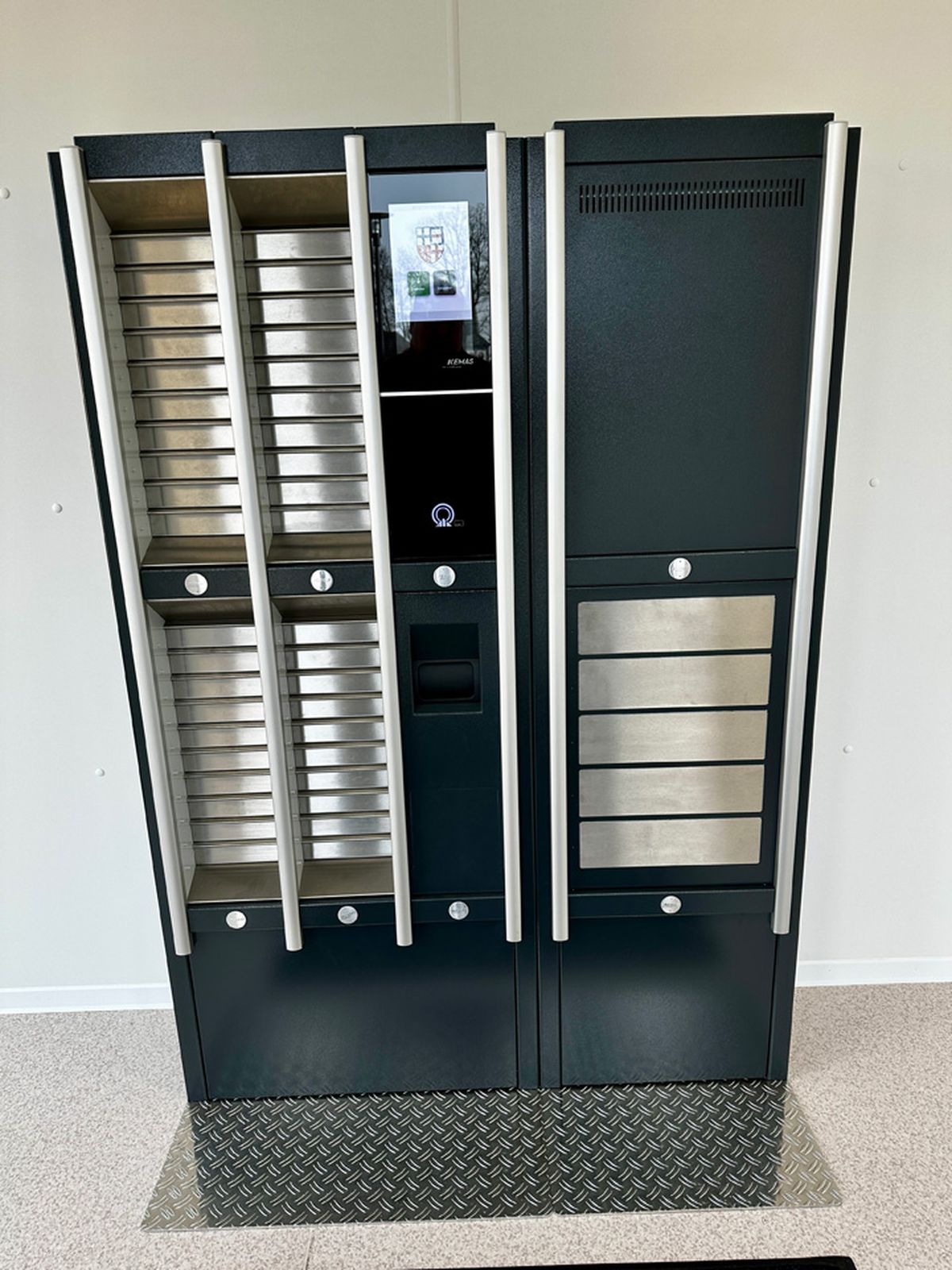
Collecting identity cards and passports regardless of opening hours: With a citizen service box, the Asbach municipality association is expanding its municipal offering. Citizens can collect completed documents around the clock – including in the evening, at weekends or between two work shifts.
In the interview, Christoph Demuth, digitalisation officer of the Asbach municipality association, talks about motivation, implementation and the importance of continuous citizen communication.
Mr Demuth, why did the Asbach municipality association look into automated document collection?
The desire for extended opening hours has been an issue for us for a long time. In particular, an additional opening of the residents’ registration office or registry office on Saturday mornings has repeatedly been discussed politically. Organisationally, however, that would be complex: In the residents’ registration office, at least two employees would have to be present because of the four-eyes principle. The citizen service box significantly expands the availability of the service without having to organise full Saturday staffing.
How did you become aware of the solution?
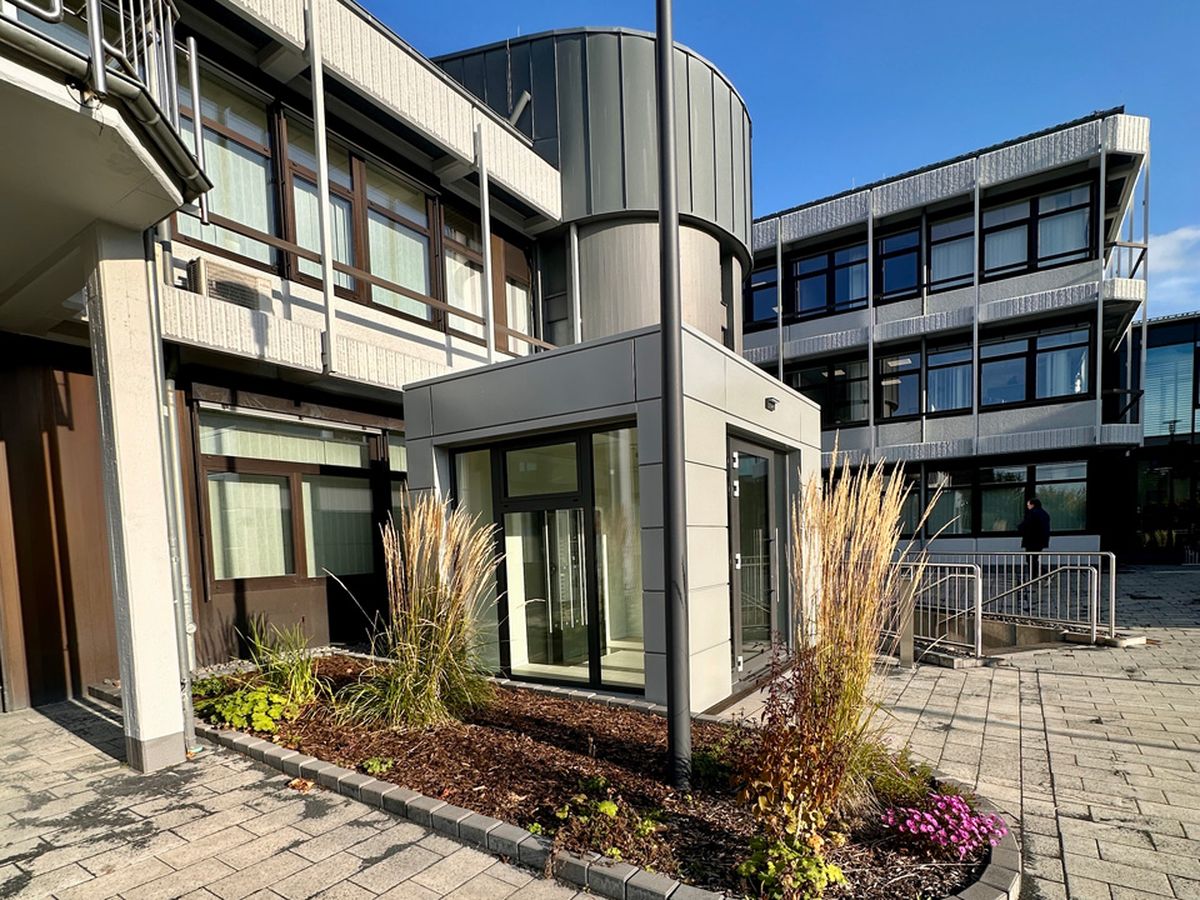
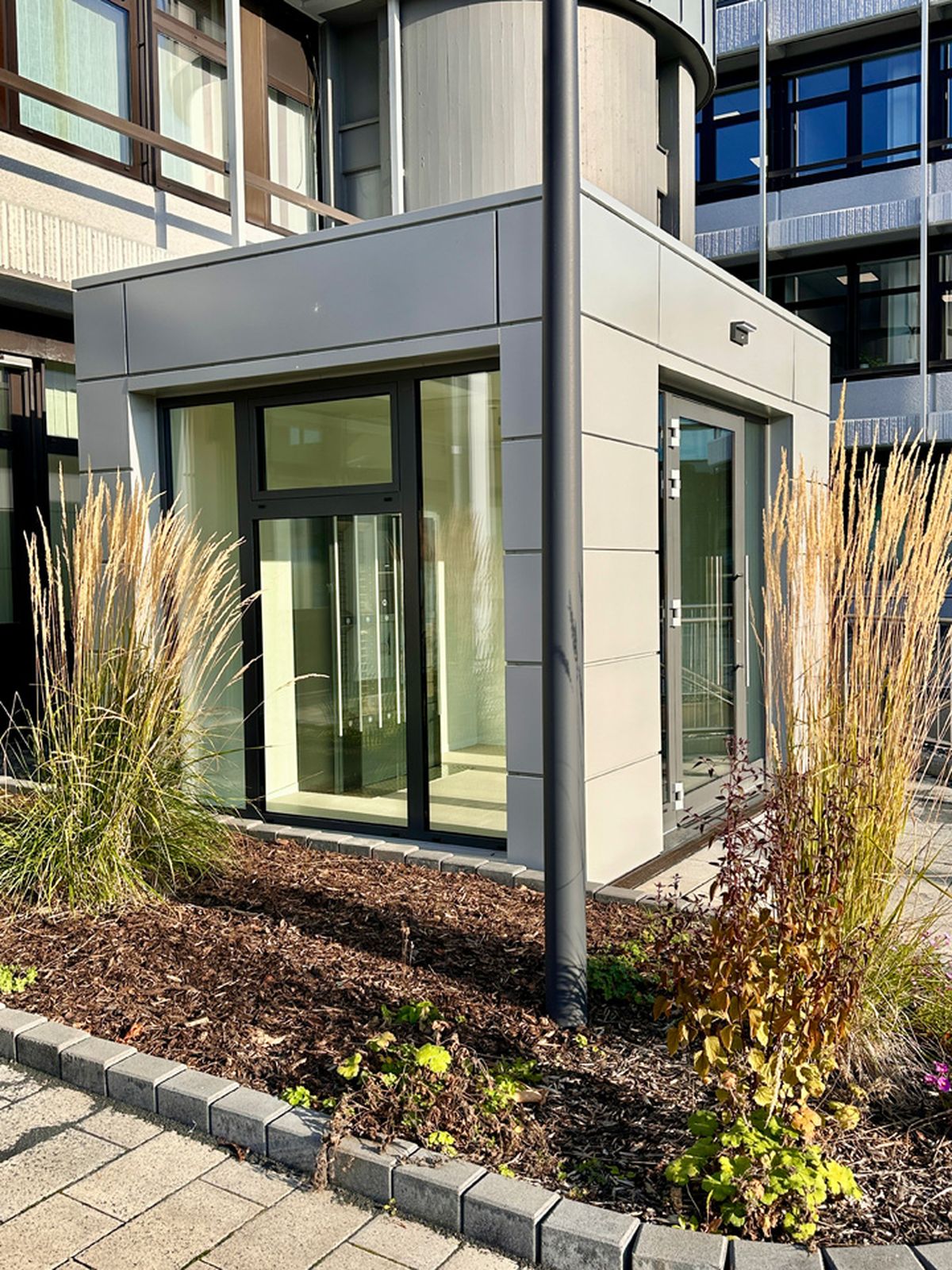
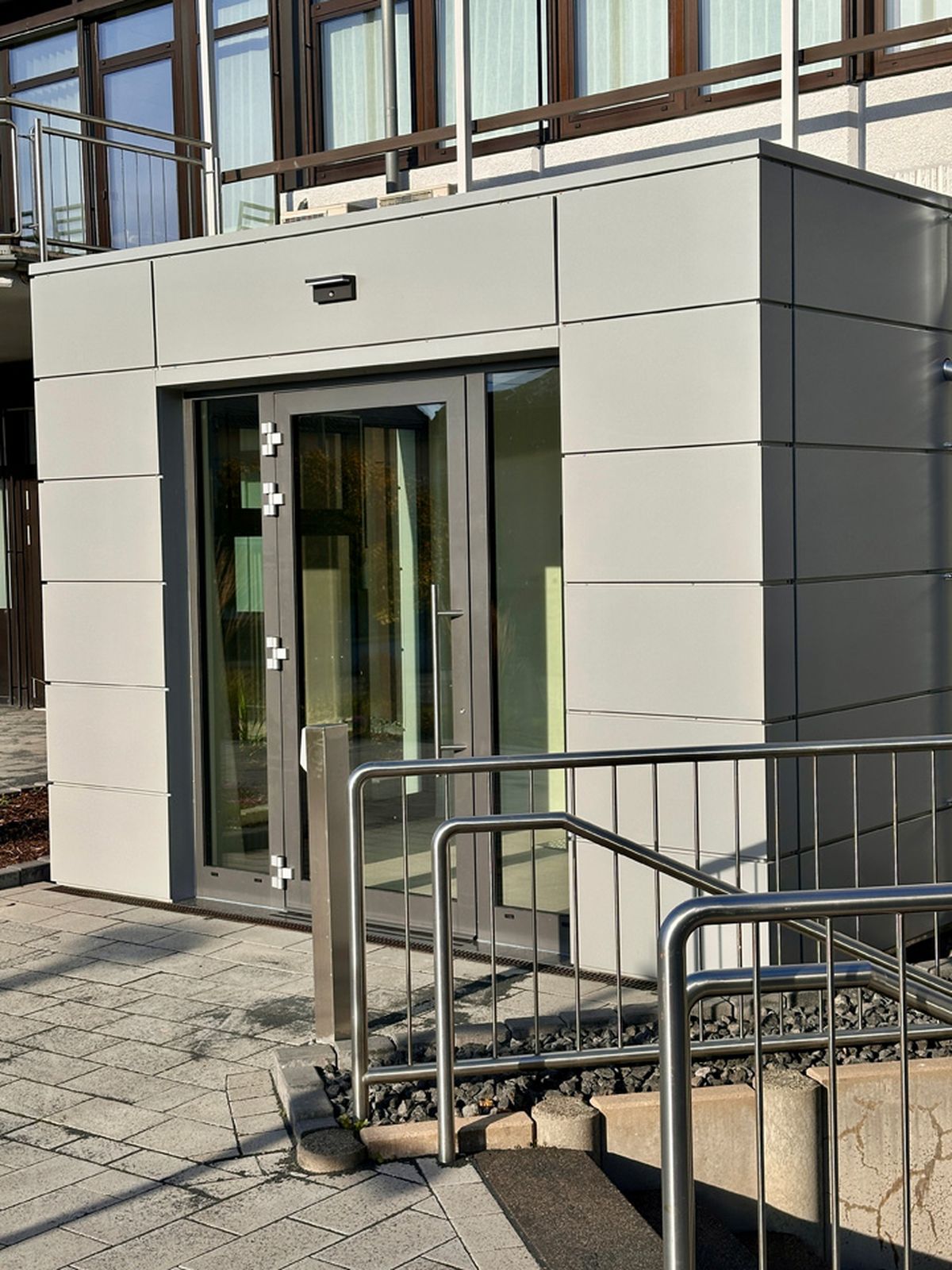
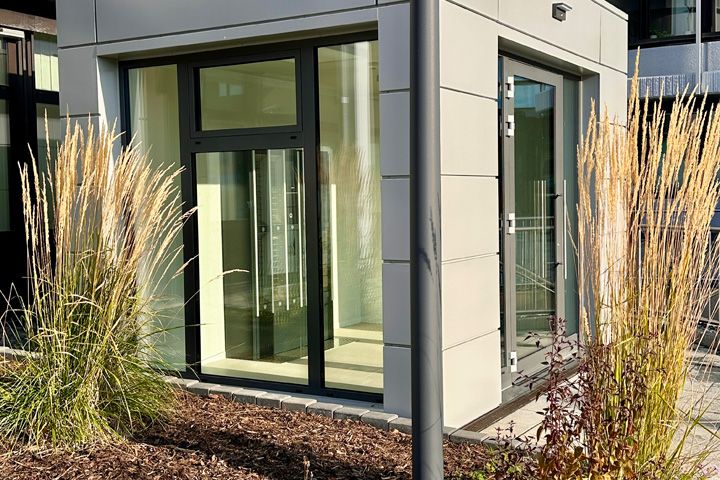
The idea came from a model project in the region. Our mayor was very interested in the solution and asked me to look into it more intensively. We looked at the implementation on site and were convinced. The idea quickly emerged to also set up our own self-service area in Asbach, independent of town hall operations. In doing so, we did not only want to solve the current document collection issue. Looking ahead, the area was also intended to provide space for additional digital services – which is why the facility was planned as a standalone pavilion directly at the town hall.
“The citizen service box is a supplementary offering to our personal support. It enables citizens to collect their documents when it fits into their everyday life.”
Which aspects were particularly important in the structural implementation?
Important factors were accessibility, security and protection requirements, as well as the technical connection to the town hall’s existing infrastructure. Since the central network room is located directly next to the new self-service area, we were able to house part of the technology securely inside the town hall. This increases security and makes support easier.
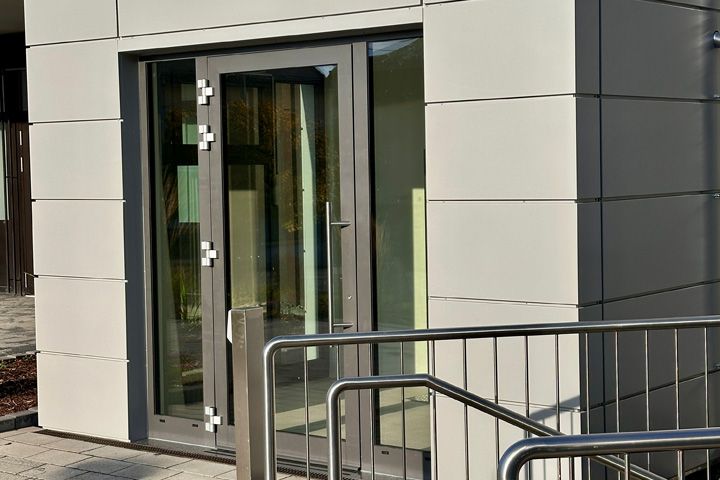
In a project like this, many details have to work together: foundation, cable routing, accessible access, delivery and installation. Close coordination between the municipality, construction company, technology partners and specialist departments is decisive. The result is something to be proud of. The pavilion has turned out to be very visually appealing and is also perceived positively by citizens.
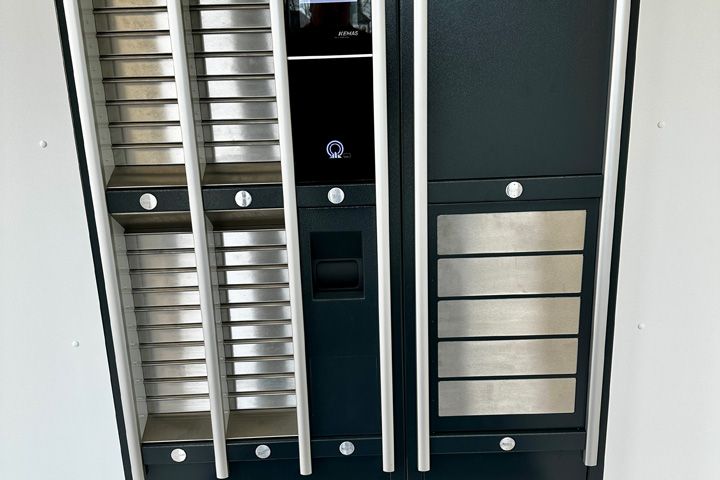
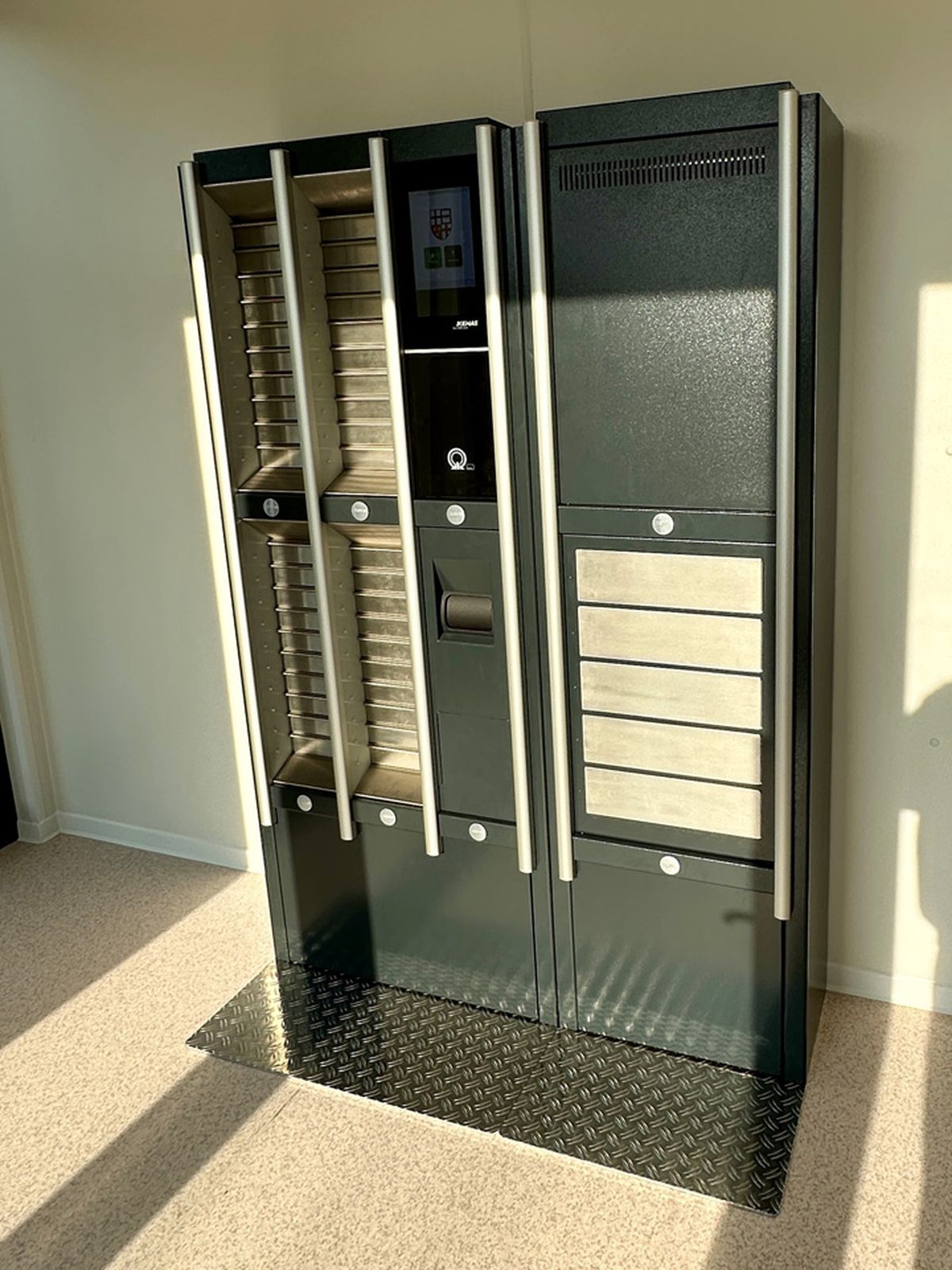
Residents can pick up their completed ID cards and passports via the drop box.
How did commissioning proceed?
Before launch, we tested the solution intensively with employees. Among other things, this showed that the access mechanism had to be adjusted more precisely.
The door opening time was extended to 15 seconds so that older people or people with limited mobility can reach the entrance easily.
These tests were very valuable. After the optimisations, the system runs reliably, and the feedback from the residents’ registration office also shows that the collection processes work.
Which documents can be collected via the citizen service box?
Currently, citizens can collect completed identity cards and passports via the box. It is clarified during the application process whether the person would like to use the service. For this, we need a declaration of consent and a personal mobile phone number. Collection must take place in person. As soon as the document is ready, the citizen is informed by SMS and can collect it within the designated period regardless of opening hours.
How exactly does collection work?
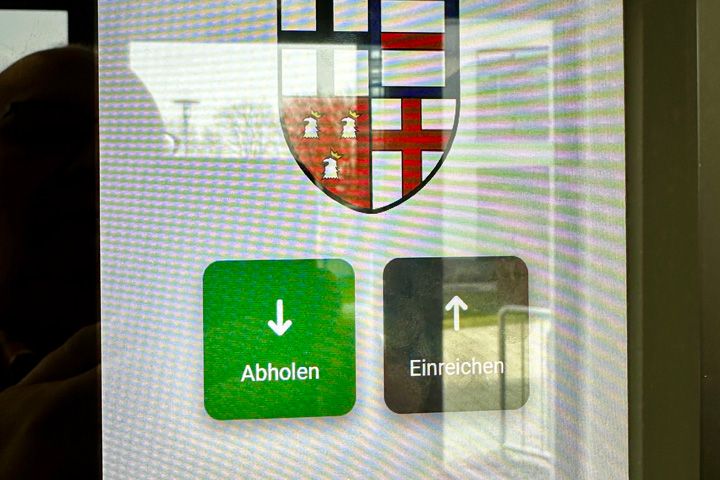
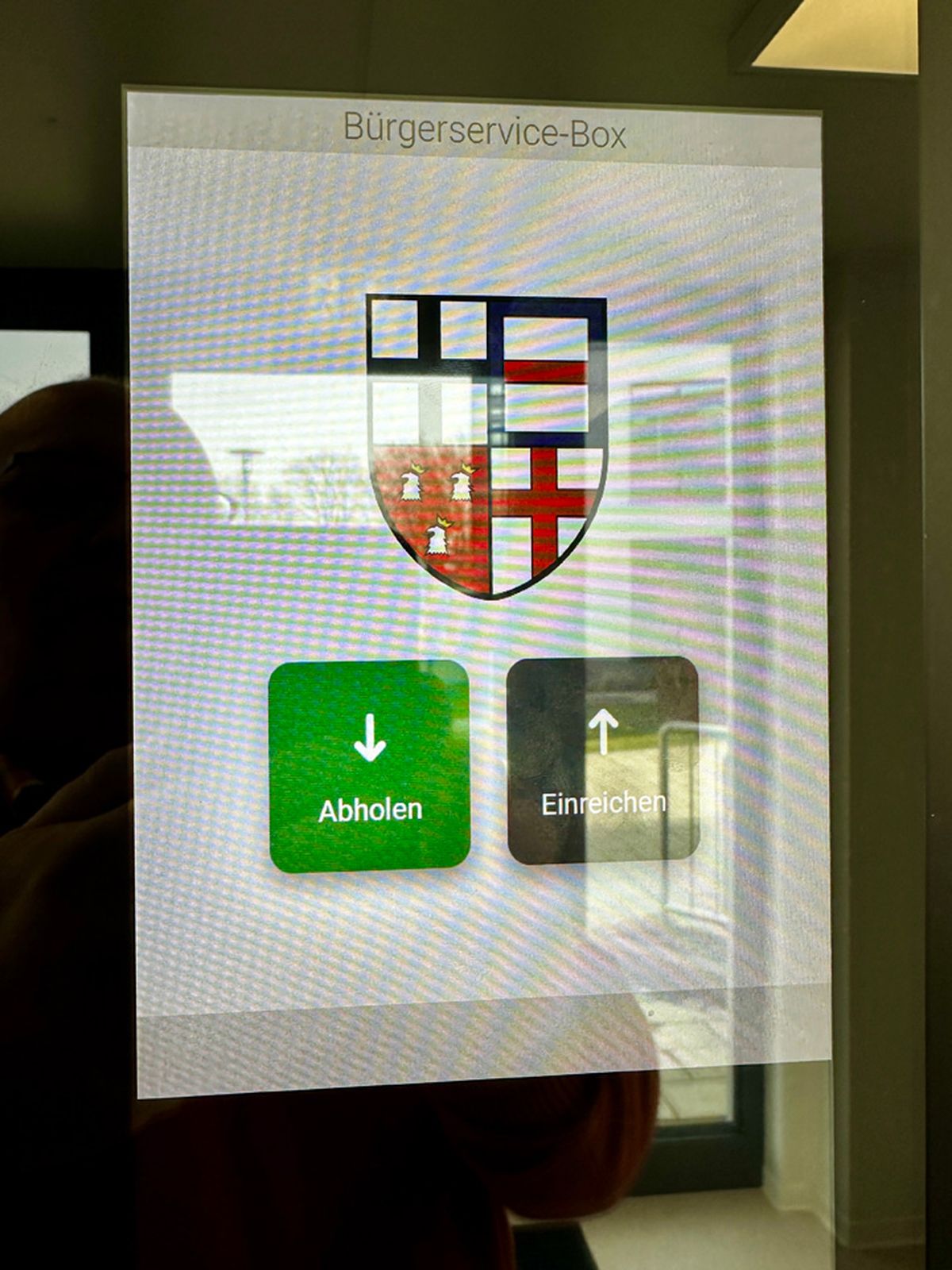
First, the person opens access to the self-service area with their bank card. At the citizen service box, the person selects the “Collect” process and enters their mobile phone number. They then receive an eight-digit security code by SMS.
For the new identity card, the CAN number of the old document is additionally entered – provided that a previous identity card is available and readable. The old identity card is then placed in the return compartment and checked. If the check is successful, the compartment with the new document opens. For an initial application or a passport, the process is correspondingly simplified: after successful identification, the compartment with the new document opens directly.
What specific added value does the solution offer citizens?
Citizens save time and gain flexibility. They can collect their documents when it fits into their everyday life – for example after work, in the evening or at the weekend.
This is particularly advantageous for working people and shift workers. For pure collection, they do not have to schedule an appointment during regular opening hours.
We have already received positive reactions on social media. There, the offering was expressly welcomed as a sensible and contemporary expansion of citizen services.
Does the box also relieve the residents’ registration office?
The citizen service box complements several measures that we have already implemented. For several years, for example, we have offered online appointment booking. Citizens can still come to the administration without an appointment, although people with a booked appointment have priority.
Despite appointment booking, there are still peak times – for example in the morning or on the long Thursday. If pure document collection is taken out of these time windows, an additional channel is created with more flexibility for the administration and the population. What remains important is this: Personal support is our main service. The citizen service box does not replace it, but complements it in a clearly standardised process.
A new offering also has to be known. How do you inform the population?
Communication is an essential success factor. We have created information material that is displayed in the waiting area of the residents’ registration office and points out the 24/7 collection option. In addition, we point out the new offering on the displays of our appointment call system. The information is shown there regularly as an overlay.
Beyond that, we use our newsletter, website and social media. The information is not published just once, but is taken up again regularly. In this way, we prevent citizens from only realising afterwards: “Had I known that, I would have used the service.”
What would you recommend to other municipalities planning a similar project?
A municipality should first clearly define which problem it wants to solve. In our case, it was the desire for more flexible document collection without having to permanently provide additional opening hours and personnel resources.
After that, the building, technology and administrative process must be considered together. Questions relating to security, technical connection, usability and responsibilities should be clarified early on.
An adequately long test phase with different users is equally important. Many details are best assessed under real-life conditions.
And finally, the new offering must be communicated actively and repeatedly. A good technical solution only unfolds its benefit when citizens know about it and understand it.

Thank you for your request. Our KEBA Customer Support will get in touch with you soon.