



35 Years of KEMAS & 10 Years of Partnership with KEBA: A Success Story
- Neuigkeiten
- Wissen
- 1.4.2026
- Reading Time: {{readingTime}} min

Contents
Since 1991, KEMAS has been developing solutions that are still in use across a wide range of industries today. The tenth anniversary is therefore a perfect occasion to look back: at KEMAS’s key milestones, at the joint projects with KEBA, and at the developments that have shaped - and will continue to shape - this partnership.
The 1990s: From an Idea to the First Success Story
In the 1990s, the foundation was laid for everything that defines KEMAS today. A simple idea gradually evolved into a business model focused on structured handover processes and reliable systems.
1991: Founded from a very practical problem
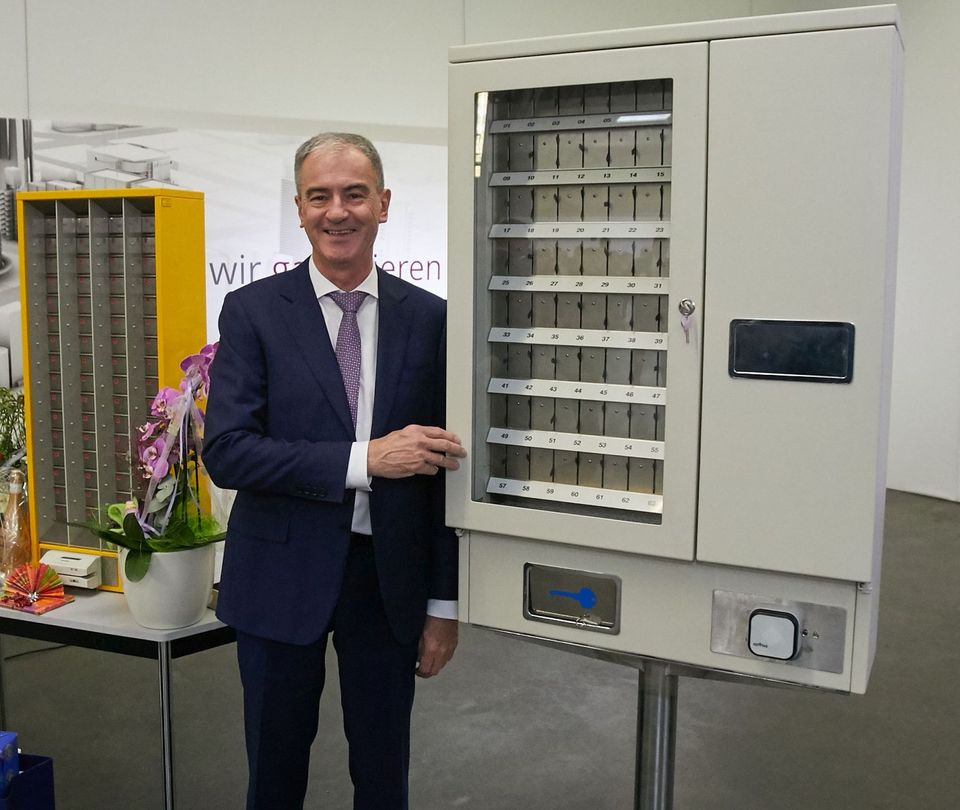
KEMAS founder Hans-Jürgen Grämer experienced long waiting times at his previous workplace, where employees had to collect office and warehouse keys centrally - costing a significant amount of time.
This raised an obvious question: how can this process be automated? This led to two initial concepts for a system that could manage and control key handovers. The first idea was a simple key cabinet with a drop-off mechanism - functional, but without controlled return. This was followed by the drawer system, which proved to be significantly more robust and controllable. The principle is still in use today.
1992–1994: The first locker system and the breakthrough
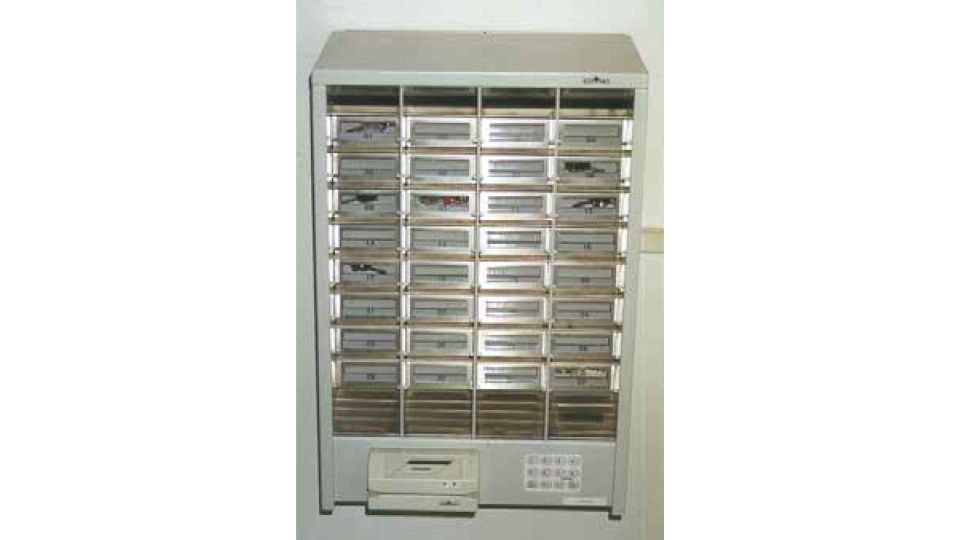
In 1992, the first locker system was developed. Remarkably for that time, it was already software-controlled. New compartments with modern unlocking mechanisms also enabled the secure storage of larger items. With the presentation of this system at the “Security Essen” trade fair in 1994, KEMAS made its first appearance to a broader public. This marked the beginning of increased market visibility.
1999: Entry into correctional facilities as a defining milestone
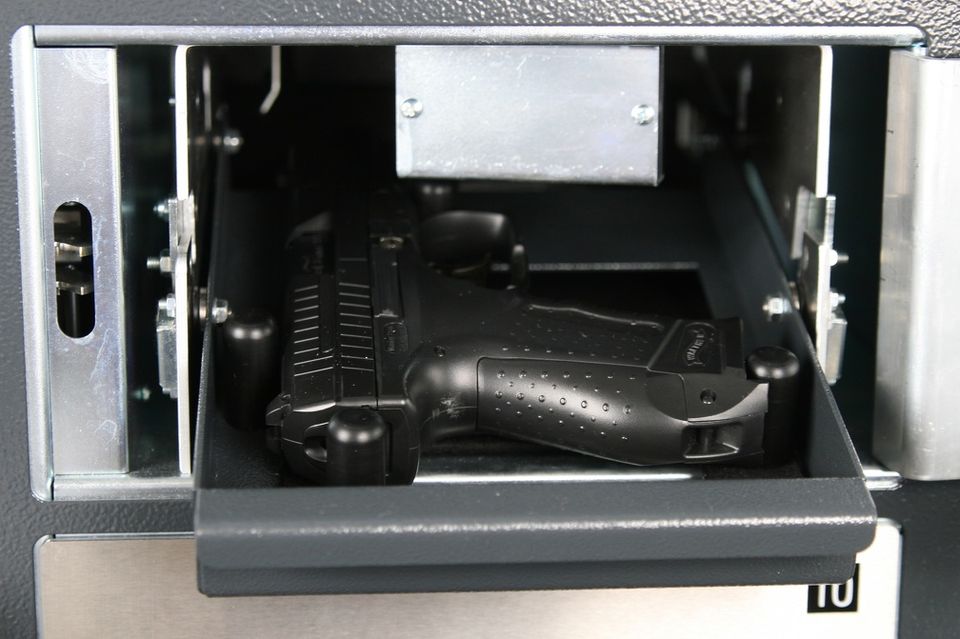
From 1999 onwards, KEMAS systems were used in correctional facilities to securely store, charge, monitor, and manage the handover of highly sensitive items such as cell keys, weapons, and personal emergency call devices.
The 2000s: Growth, New Industries, and the First Digital Processes
The following decade was characterized by expansion. KEMAS transferred its core principle of secure handover to new application areas and developed solutions far beyond traditional key management. At the same time, digital processes and RFID technology increasingly became integral parts of the systems.
2001–2002: Automotive and fleet management
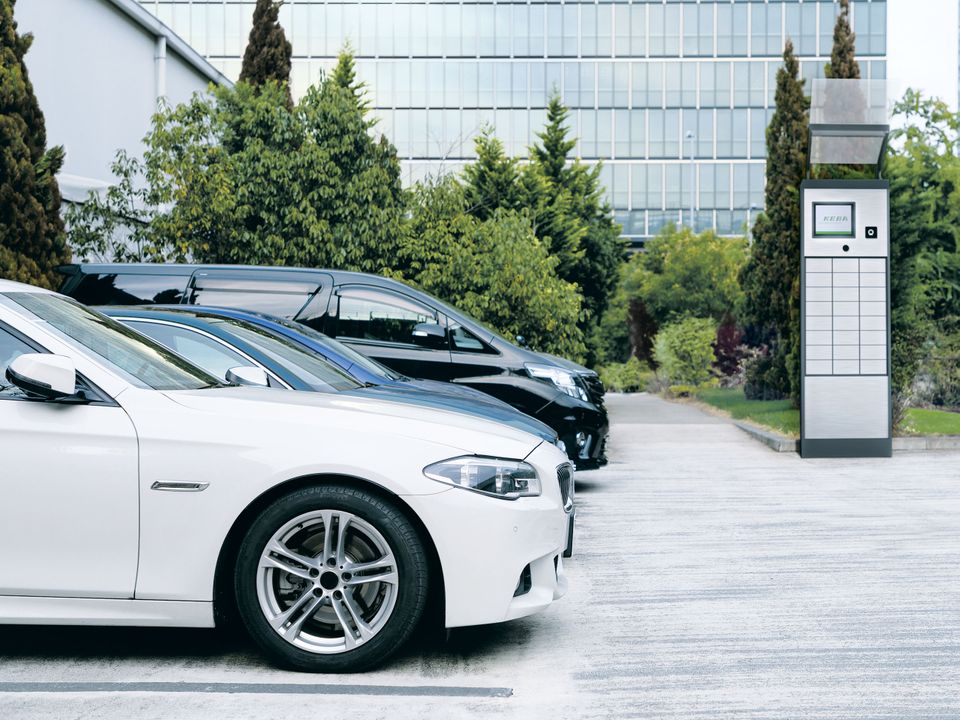
With solutions for car dealerships and fleets, KEMAS opened up a new field of application. Vehicle keys were equipped with RFID transponders and integrated into system workflows. This made it possible to transparently track the location and status of each key. In 2002, a modular system was also introduced, allowing different types of compartments to be combined within a single installation.
2007: Storebox
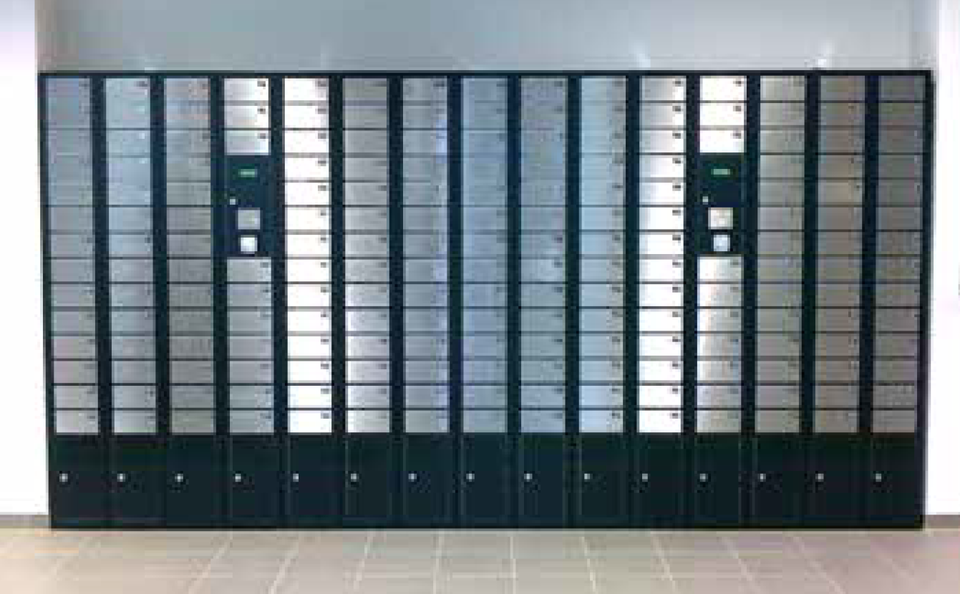
The Storebox, a particularly space-saving system that allows a large number of keys to be stored in a very small area, was developed.
2009: Removal prevention as an additional security layer
A feature was introduced specifically for security-critical environments to prevent sensitive items from being unintentionally removed.
Since 1991, we have been one of the leading providers of automated handover solutions for customers and employees, based on RFID technology.
The 2010s: Diversification and New Business Areas
In the 2010s, KEMAS evolved from a key management specialist into a provider of a wide range of handover solutions. New industries were added, and the systems became increasingly versatile.
2010: e-Reception as a digital front desk
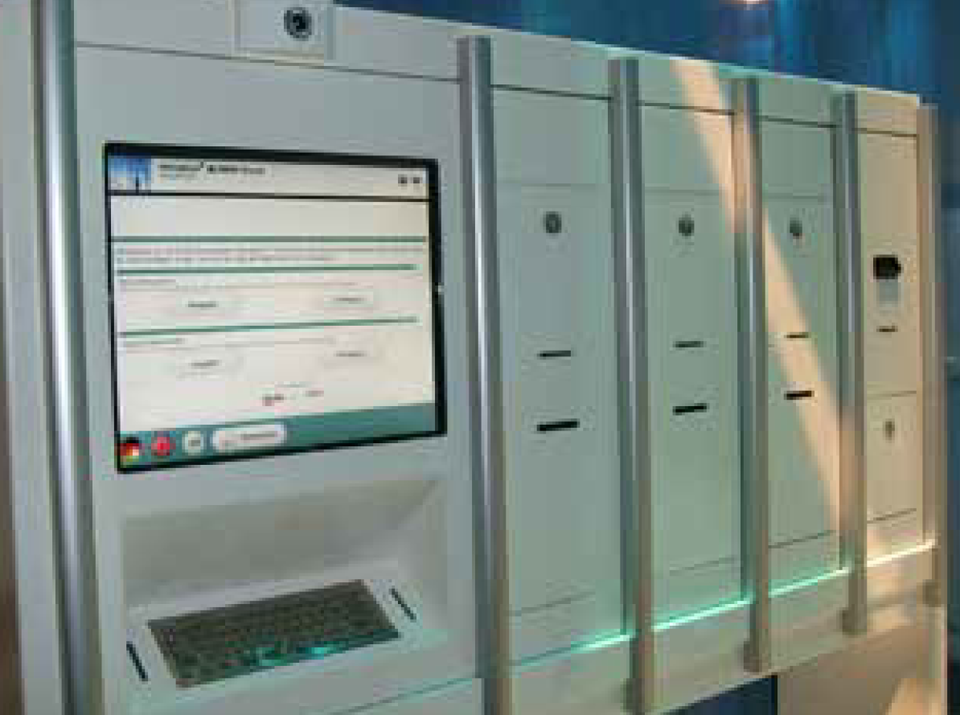
Visitors can register themselves at the e-Reception, automatically receive access media, and move through buildings with the appropriate authorization.
2013: Entry into textile logistics with texLOG®
Systems for the automated dispensing and return of workwear significantly expanded the portfolio and opened up new applications and industries.
2017: Tool management expands the portfolio
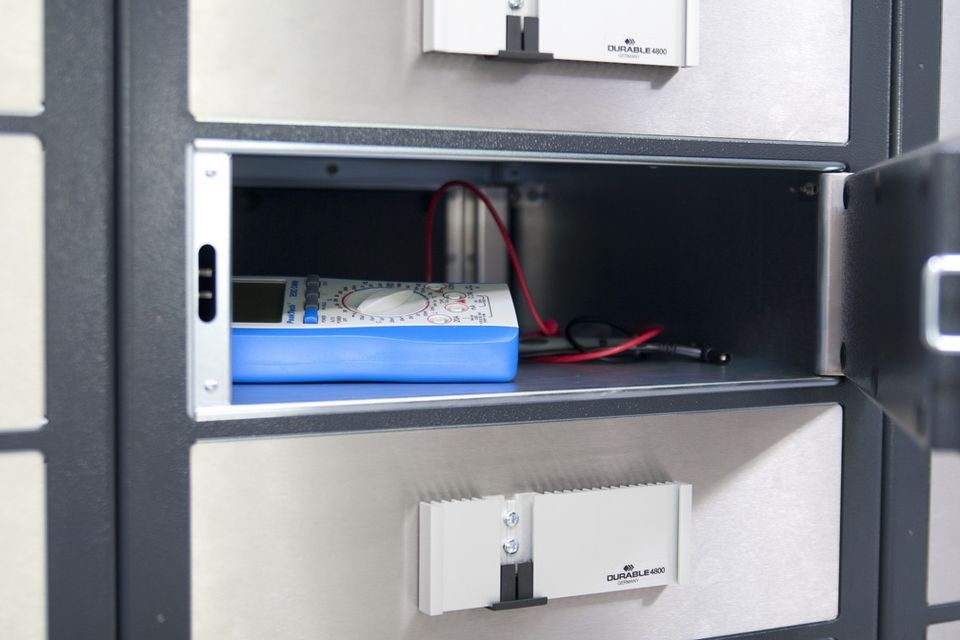
With growing requirements and new ideas, the systems evolved from pure key management to managing a wide range of work equipment. From 2017 onwards, tool management - including reservations, digital defect recording, and transparent documentation - became part of the solution.
Our solutions are used across a wide variety of industries. Whether in plant security, emergency services, or hospital facility management, customers rely on our systems to enhance security, ensure mobility, and provide resources as needed.
Since the Acquisition: Collaboration, New Technologies, and a Forward-Looking Perspective
In recent years, there have been multiple projects where the strengths of KEBA and KEMAS have been effectively combined. One example is our citizen terminal, also known as the “Amt-O-Mat”: here, KEBA’s terminal technology and KEMAS’s handover system work seamlessly together to provide documents in an automated and secure way.
KEBA hardware has also been specifically integrated into other KEMAS solutions and combined with proprietary software—for example, to implement systems for outdoor use. The technologies of both companies complement each other perfectly. The combination of hardware and software expertise creates significant added value—and this is only the beginning.
These examples illustrate how productive the collaboration between KEBA and KEMAS has already been - and how much potential lies ahead when two innovative companies join forces. At the same time, the focus remains clearly on the future. Many new developments continue to emerge directly from concrete market requirements and close collaboration with our customers. Here is what we are currently working on:
Multi-RFID technology: Enables multiple items to be detected and clearly assigned within a single compartment. This saves space and increases efficiency.
Optimization of texLOG® system design: More compact control units create additional capacity and allow for better use of storage space.
24/7 service stations in the automotive sector: These enable flexible vehicle drop-off and pick-up, independent of opening hours.
Thinking Ahead Together: A Strong Foundation for the Future
The story of KEMAS began with a simple idea: to make key handovers easier and more secure. Step by step, this idea has evolved into a comprehensive portfolio of automated handover solutions. Together with KEBA, this experience is combined with strong hardware expertise and international technological development - forming a solid foundation for future innovations. And we are very much looking forward to what comes next.