



CO₂ footprint of cash recyclers: Why banks should care
- News
- IM TREND
- 17.12.2025
- Reading Time: {{readingTime}} min
Contents
Key insights
- Energy efficiency as the biggest lever
A significant portion of an ATM’s CO₂ footprint comes from its power consumption during operation. Modern systems – such as KEBA’s latest generation – therefore focus on intelligent energy management, efficient components, and reduced standby consumption.
- A holistic lifecycle approach
Sustainability starts at the very beginning of product development – from the selection of durable materials and optimized logistics to modular designs that allow upgrades instead of complete replacements.
“Every additional month in the lifetime of a cash recycler leads to noticeable improvements in resource efficiency.”

- Ease of maintenance as an enabler
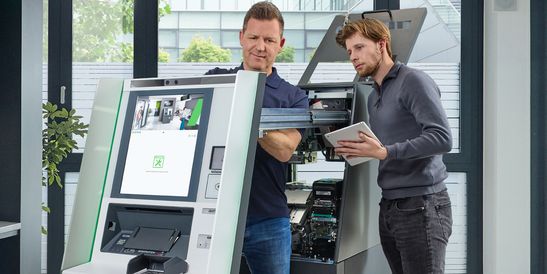
Easy accessibility of components, simple repairs, and remote monitoring reduce maintenance efforts and the need for on-site service visits – saving both costs and CO₂ emissions through fewer service trips.
- Upgradability as a success factor
Upgrades extend a device’s lifetime. The key is for banks to rely on flexible solutions that can be adapted over many years – thereby reducing resource consumption.