



How Freistädter is electrifying its truck fleet – and why the depot is crucial
- News
- Corporate
- Knowledge
- Business
- Technical
- Charging
- Success Story
- 20.4.2026
- Reading Time: {{readingTime}} min
Contents
About Braucommune Freistadt
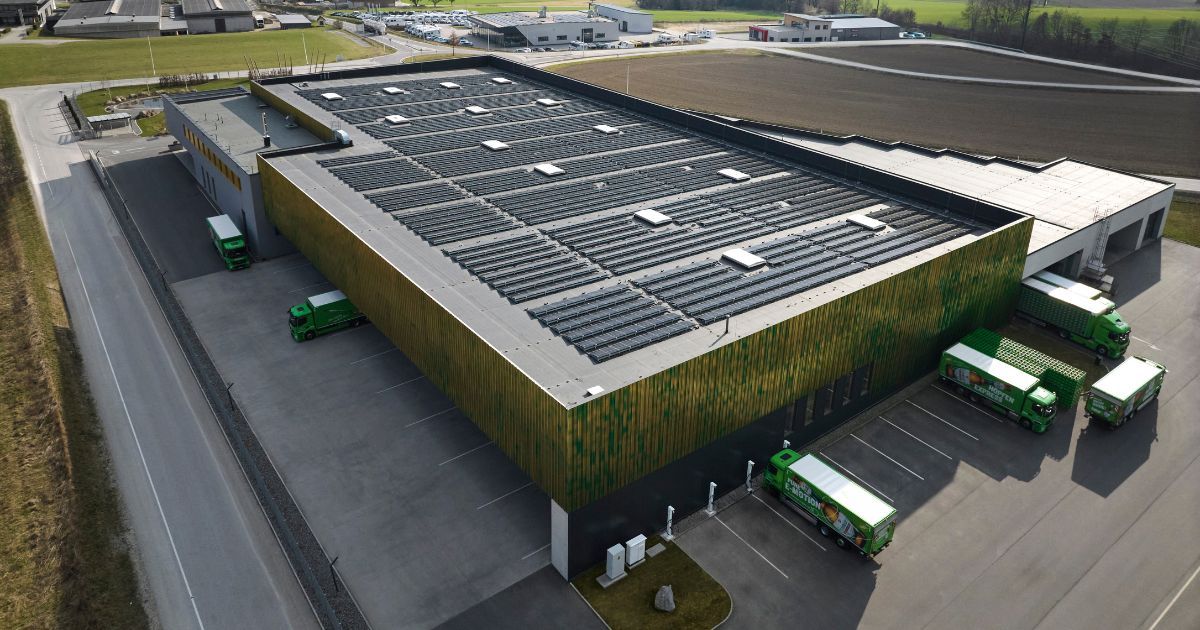
Braucommune Freistadt is an independent private brewery based in Freistadt, Upper Austria. The company produces beer as well as non-alcoholic beverages. It is 100% independent and owned by 149 town-centre properties. Its products are available in retail and the hospitality sector. Visit the Braucommune Freistadt website
Clear requirements in day-to-day operations
The operating conditions are typical for many logistics companies: fixed routes, tight time windows and high availability requirements. The vehicles set off early in the morning, cover around 300 kilometres per day and return to the depot in the evening. By the next day, they must be fully ready for operation again.
At Freistädter, charging takes place overnight at the company’s site. Each vehicle requires around 400 kWh.
In practice, several challenges arise at the same time:
- multiple vehicles charging in parallel
- limited grid connection capacity
- existing infrastructure with restricted space
- increasing demands due to the gradual expansion of the fleet
The solution: Central power unit with flexible charging points
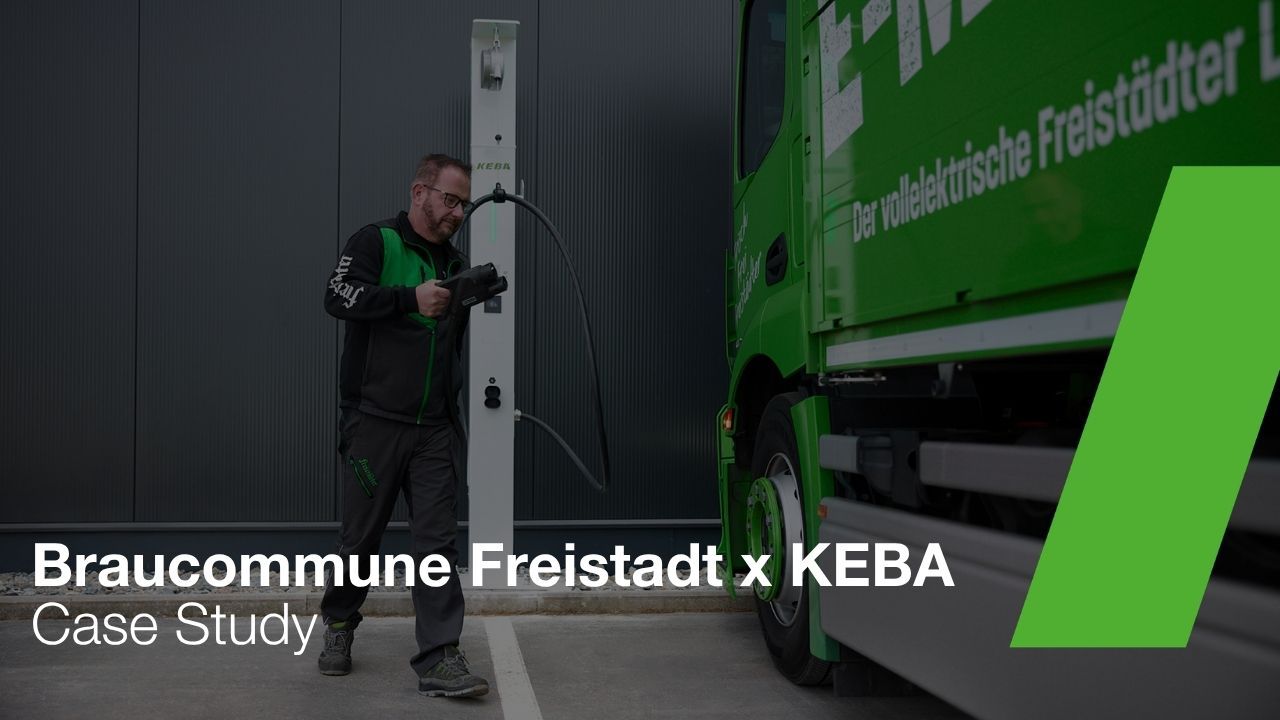
To meet these requirements, a modular charging infrastructure was implemented together with KEBA.
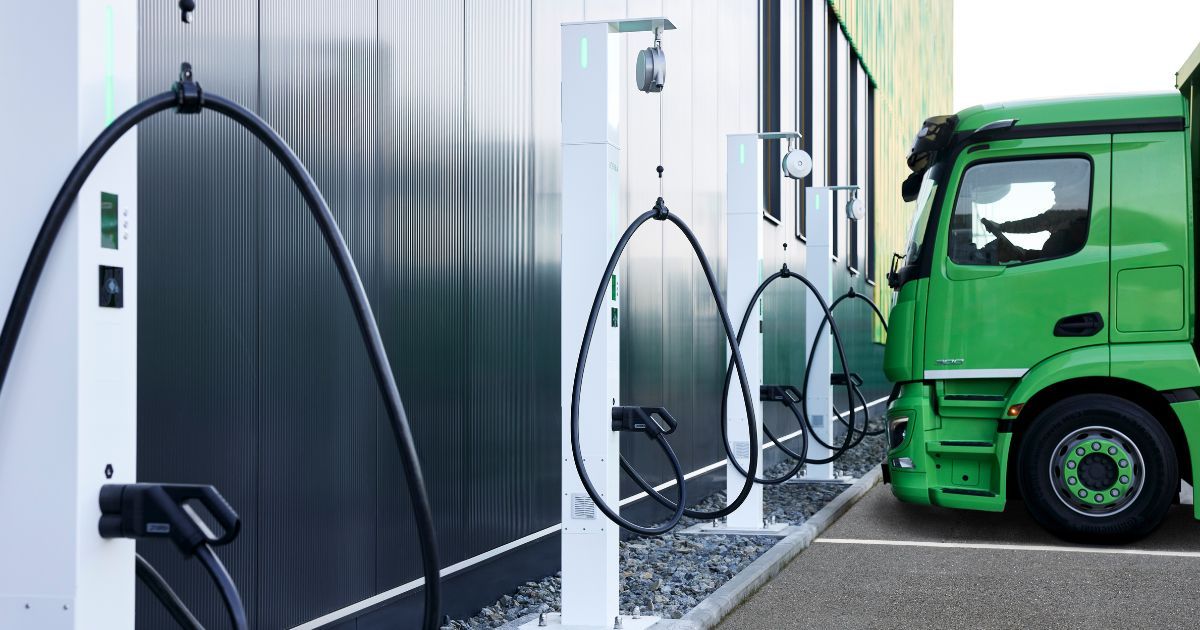
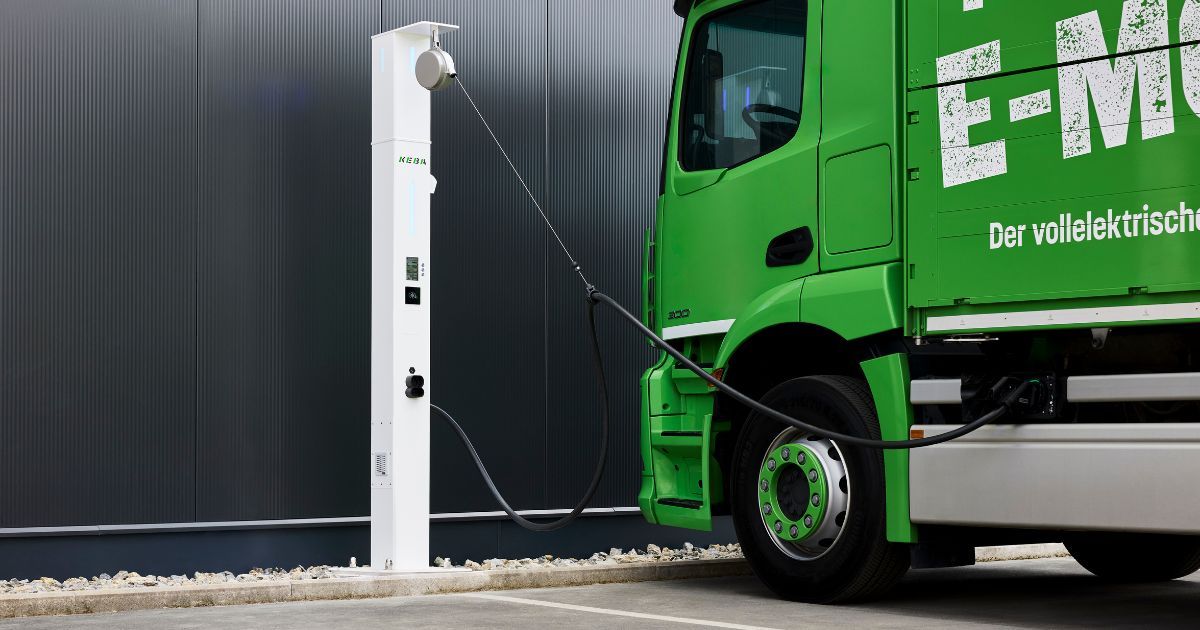
The principle: a central power unit based on the KeContact DCU10 supplies multiple charging points, the KeContact DCL10, which are flexibly distributed across the depot. The available energy is intelligently allocated to the vehicles.
This delivers key operational benefits:
Optimal integration: The dispensers require minimal space within the driving area. The KeContact DCL10 has a footprint of less than 0.5 m², making it ideal for tight depot environments, such as loading ramps or docks. The power unit is installed separately – an advantage, particularly in dusty, wet or harsh conditions.
Flexible scalability: Additional charging points or higher charging capacities can be added step by step.
Efficient load management: The available grid capacity is dynamically distributed across the vehicles.
Central control and monitoring: Charging processes can be monitored and analysed via the service portal.
Transparency and eligibility for funding: RFID-based authorisation enables clear assignment of charging sessions to individual vehicles. In combination with metering-compliant DC solutions, this provides the basis for transparency and access to funding mechanisms such as e.g. the THG quota in Austria.
Intelligent use of solar energy
Part of the required energy comes from the company’s own photovoltaic system. This can help smooth peaks in electricity drawn from the grid and, depending on the electricity tariff, reduce energy costs. By integrating solar PV and storage, the depot generates its own electricity, stores it for later and uses it as needed.
For us, it was crucial that the solution works in day-to-day operations. Our vehicles have to be ready for use every morning. At the same time, it was a classic brownfield situation – we had to integrate the charging infrastructure into an existing depot. This made it all the more important to have a system that can be flexibly adapted, grows with our fleet, and, through the integration of photovoltaics, also pays for itself quickly